

Our Provenance Guarantee
Purchase with confidence. All of our wines are selectively sourced and thoroughly inspected for authenticity and signs of poor storage. Accepted bottles are preserved in our climate-controlled cellar until they reach your doorstep. We have no storefront and no walk-in traffic, so nothing is moved or handled between inspection and shipping.
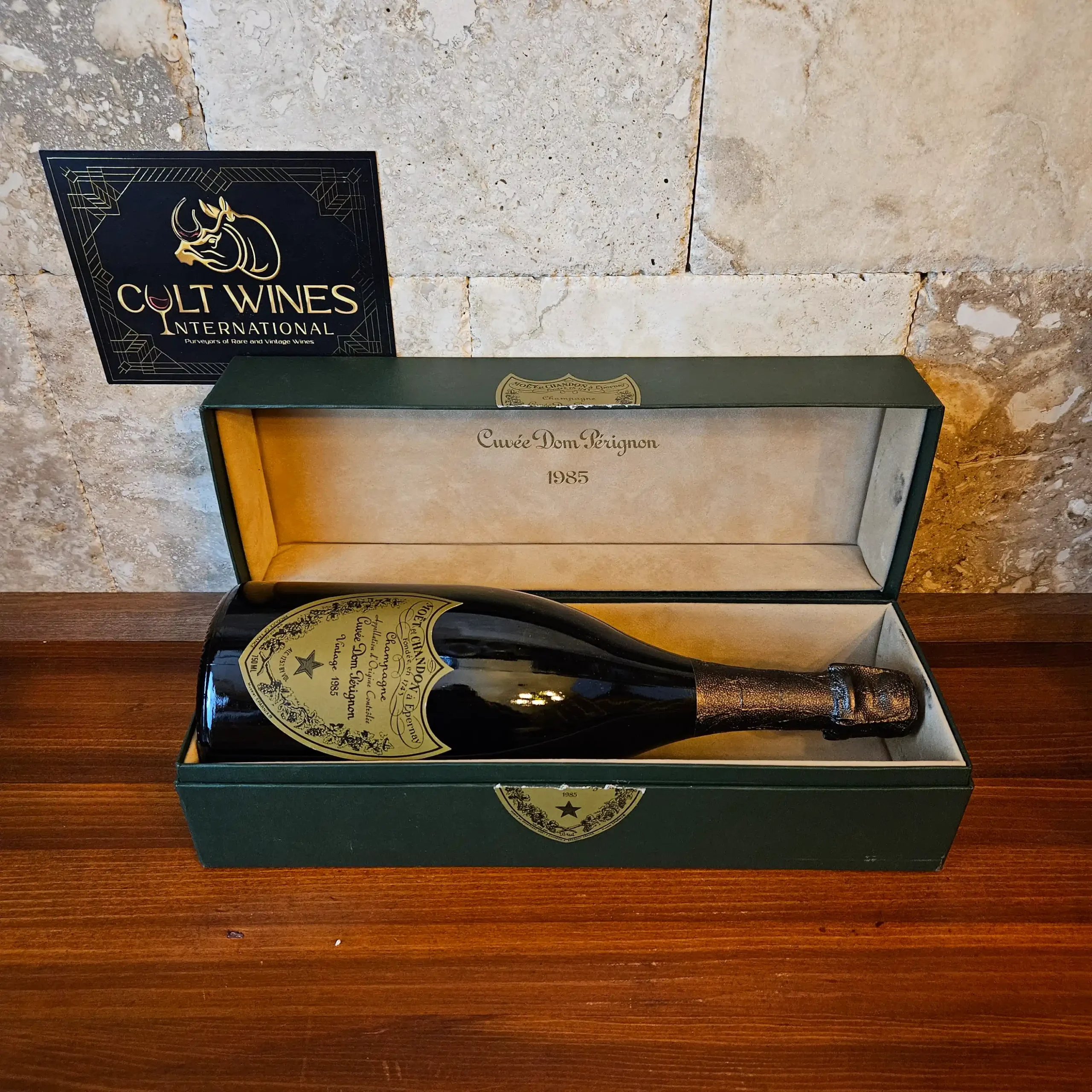
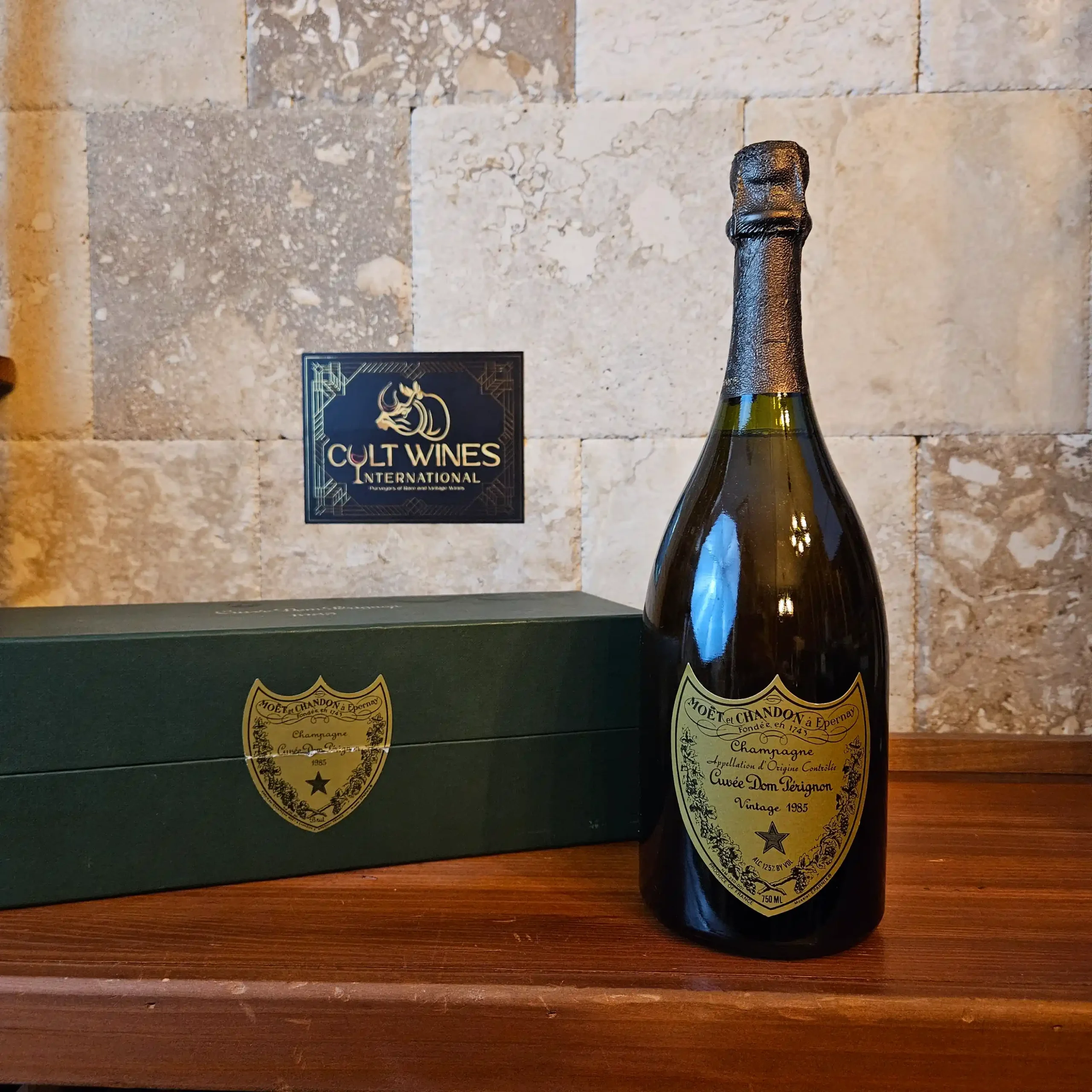
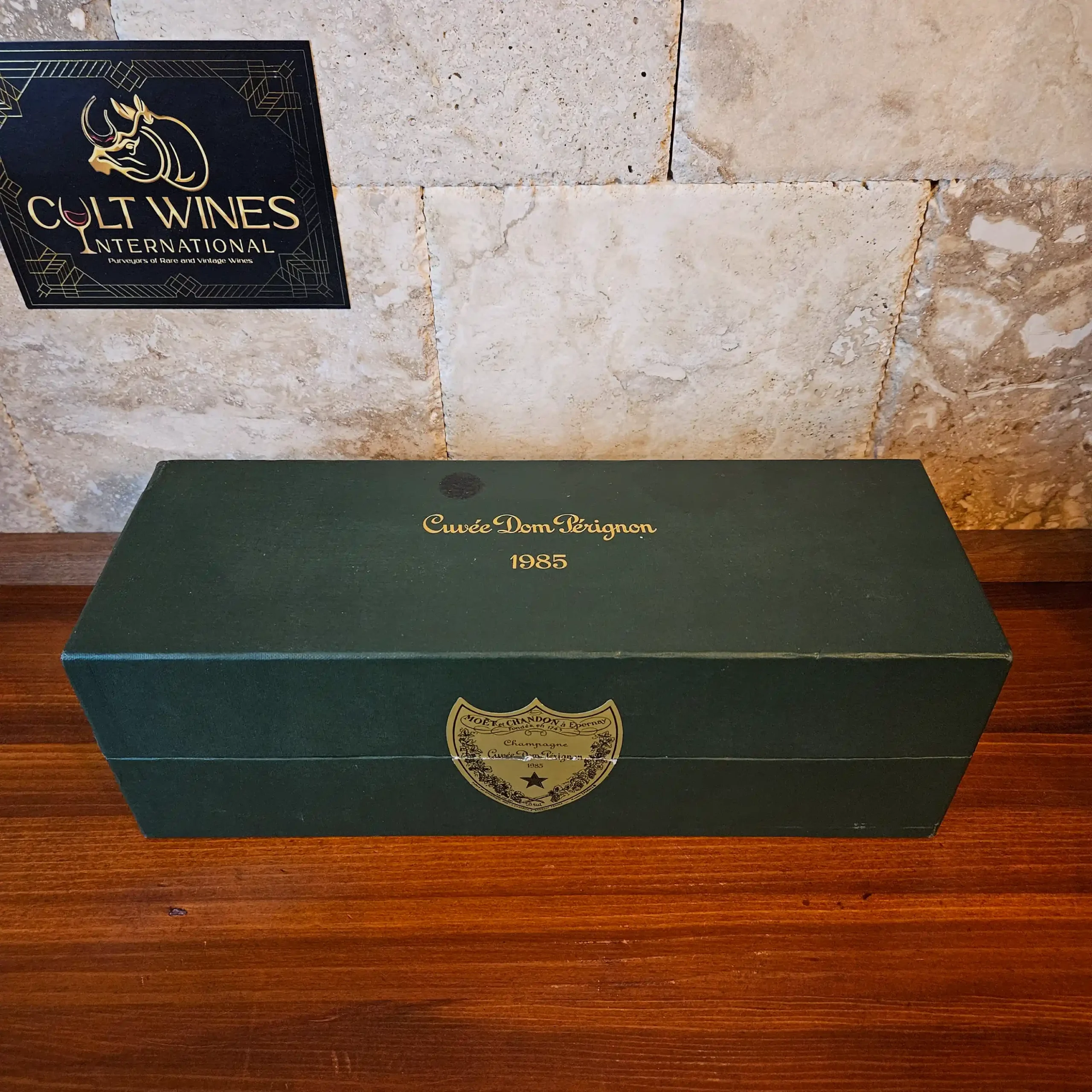
The bottle you see photographed is the bottle you receive (or fundamentally identical when multiple bottles are listed), and our commitment to you is that it arrives as represented. If it doesn’t, we want to hear from you.
Tasting Notes:
96 points John Gilman
The 1985 Dom Pérignon is still several years away from its peak of drinkability, and while it is certainly quite approachable at this stage in its evolution, this wine will continue to improve with further bottle age. The bouquet is deep, complex and still a tad adolescent, as it offers up scents of tart apples, pink grapefruit, gentle herbal tones, a touch of limepeel, stony minerality and a smoky topnote. On the palate the wine is deep, full-bodied, complex and still quite young, with a rock solid core of fruit, bright acids, fine focus and balance, tiny bubbles and superb length and grip on the racy finish. While some tasters around the table thought this wine was drinking beautifully, for my palate it remains still a bit bound up in its minerally adolescence and will offer up significantly more opulence and toasty charm with another five to ten years of bottle age. It should prove to be an absolutely classic vintage of Dom Pérignon. (5/2018)
96 points Robert Parker’s Wine Advocate
No tasting note provided. (12/1994)
95 points Allen Meadows – Burghound
At 30 years of age many ’85s in fifth are now tiring but the same wines in magnum are often still singing beautifully and the ’85 Dom is just one of those beauties with its elegant and highly complex nose that displays mature aromas of yeast, toast, baked apples, citrus, spice and soft floral nuances. The delicious and equally complex middle weight flavors are still supported by a firm but balanced mousse where the mouth feel is quite fine before culminating in a long, toasty and regal finale. This has arrived at its peak and should probably be drunk up over the next decade or so absent one having a preference for post-mature aromas and flavors. That said, anyone lucky enough to have this in magnum is in for a real treat! (10/2015)
Cult Wines International Notes:
Dom Pérignon, the flagship prestige cuvée of Moët & Chandon, carries a legacy deeply intertwined with the very origins of Champagne, named in honor of the 17th-century Benedictine monk who pioneered critical quality advancements in blending and bottling. Guided by an uncompromising philosophy of absolute vintage, the house only declares a release in years where the fruit achieves flawless harmony, aiming to capture a dual nature of ethereal lightness and powerful density. By the mid-1980s, under the meticulous guidance of the winemaking team, the estate continued to master its signature combination of equal parts Chardonnay and Pinot Noir, sourcing exclusively from the historical Grand Cru plots and the legacy Premier Cru of Hautvillers. The 1985 vintage is widely revered by connoisseurs as one of the most complete and emotionally resonant expressions of the house’s style from the late 20th century.
The 1985 growing season in Champagne is the stuff of legend, defined by a dramatic climatic turnaround that yielded an unforgettable vintage. The year began with a catastrophic winter freeze, where temperatures plummeted low enough to kill old vines and severely decimate the potential crop size. A cool spring and a late flowering followed, but the vintage was saved by an absolutely pristine, sun-drenched August and September. This glorious late-summer heatwave allowed the remaining, low-yielding clusters of Chardonnay and Pinot Noir to achieve an extraordinary concentration of flavor, balanced by a remarkably vibrant, chiseled acidity. Harvesting took place in late September under ideal conditions, producing fruit of immaculate health. The resulting 1985 Dom Pérignon is celebrated for its majestic balance, seamlessly marrying a rich, vinous texture and toasted brioche complexity with a piercing freshness that has allowed it to age magnificently for decades.
Bottle Size:
750 mL
Storage History:
Bottle is on consignment. Storage history is uncertain.
Condition:
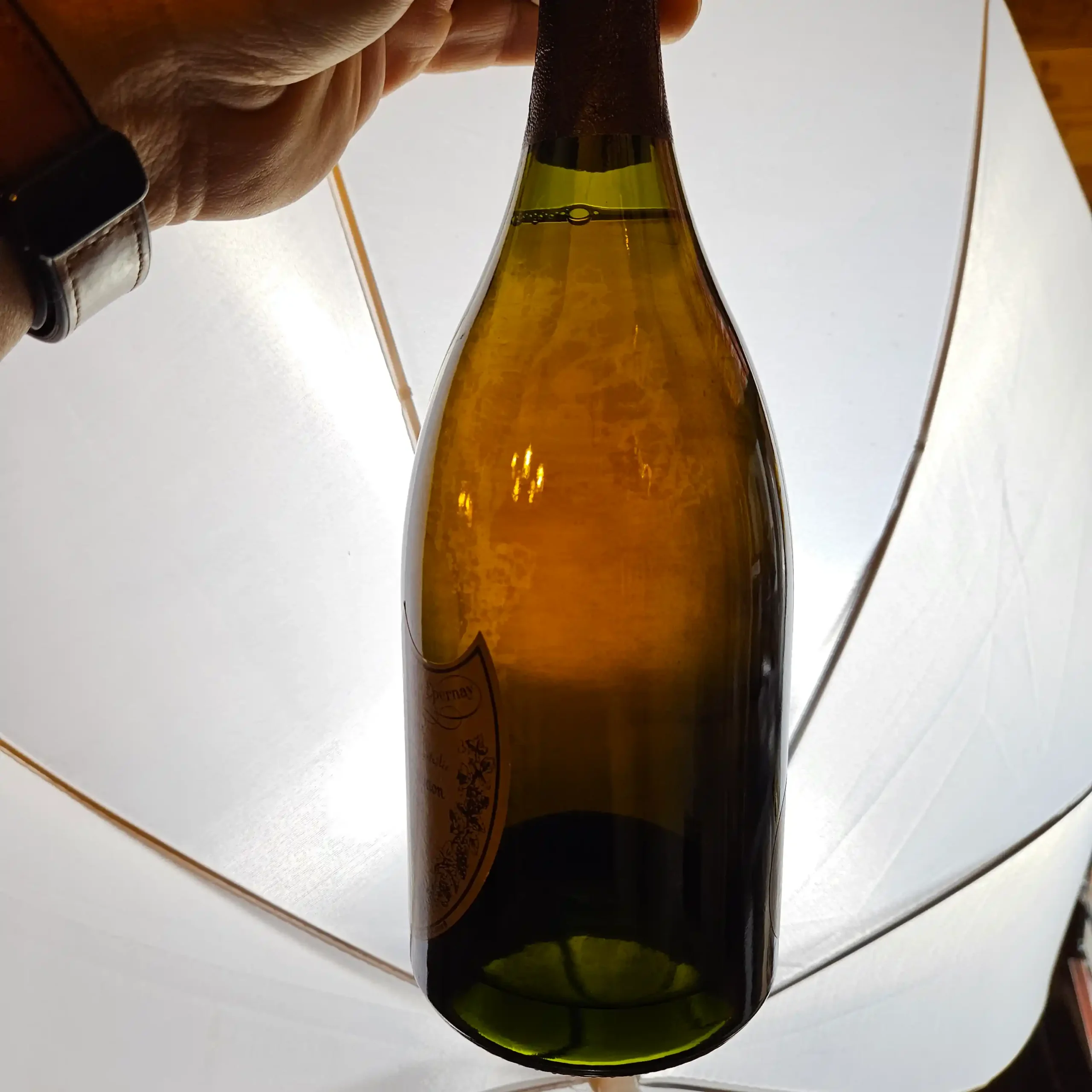
Please note: The bottle shown is the exact bottle being sold.
This bottle is highly discounted due to its condition. Fill level is about 3/4″ below the foil. Color has darkened with age, and some interior bottle staining exists from sediments. Not optimal condition.


